By Rosemary Bailey
This article was published in the April 2026 edition of Soul Search, the Journal of The Sole Society
I had always thought that divorce was very rare for fairly ordinary people well into the twentieth century. However an article in the last journal by Louise MacCarthy included George Kirklinton Saul who had married a divorcee in 1903, which prompted me to take a look at the divorce records on Ancestry and I found some very ordinary people who had divorced as early as 1868.
Of course it is Henry VIII who is often thought to have got the first divorce in Great Britain. By the late 1520s his first wife Catherine of Aragon, had failed to produce a male heir and as well as this, he wanted to marry Anne Boleyn. So in 1533 he split from the Catholic Church creating the Church of England, he then declared that Catherine had been married to his brother first (thus violating biblical law) so the marriage had never been valid and Henry declared it void and went on to marry Anne Boleyn. Not strictly a divorce rather an annulment.
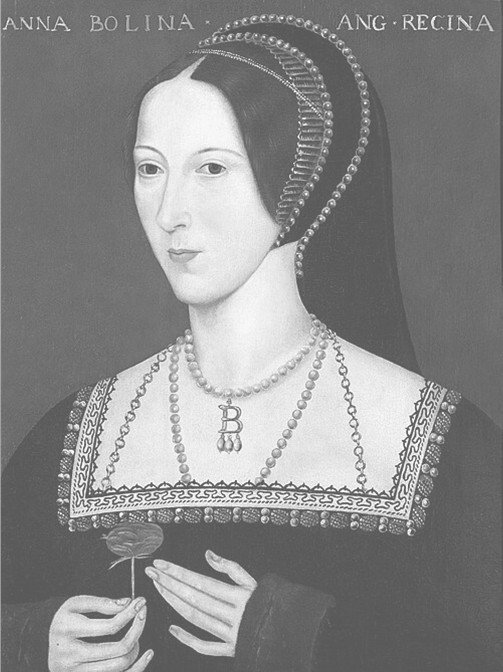
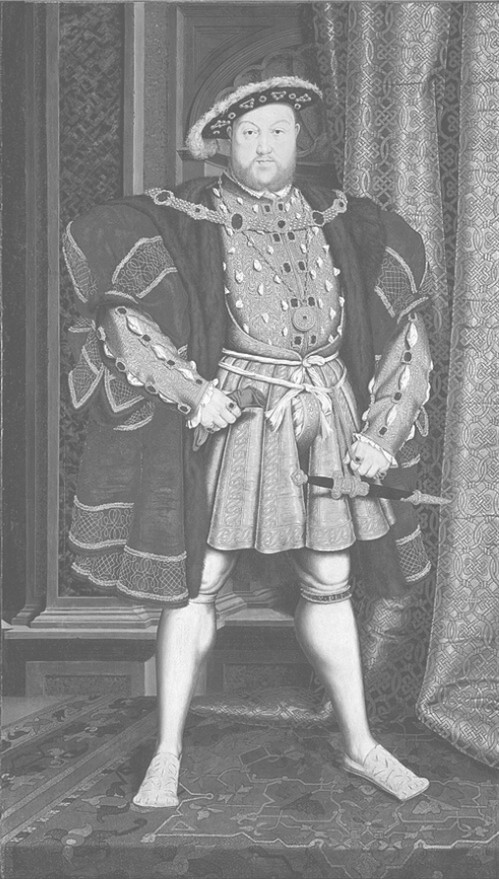
This episode set the stage for England’s Protestant Reformation, which made divorce more accessible (at least for men) but also introduced secular annulment laws.
The first actual divorce in the UK took place in 1670 when, John Manners (Lord Roos) was divorced from his wife Anne Pierrepont by an Act of Parliament. Lady Anne had left her husband, and started living with Sir John Packington. Lord Roos sued Packington for adultery and succeeded, resulting in the annulment of their marriage. This divorce case set a precedent that allowed wealthy individuals to obtain divorces by an Act of Parliament, but it was not until the 19th century that divorce became more widely available.
In 1857 the Matrimonial Causes Act made divorce easier and not requiring an Act of Parliament. Under the new law, men had to prove that their wives had only been unfaithful whilst women had to prove their husbands had been unfaithful but also had to prove additional faults, which included cruelty, rape and incest.
What I found odd when I looked at some of the examples of our surnames involved in early divorces was how ordinary the people were. I had thought that in Victorian times it was only the very wealthy who could divorce, but this wasn’t case.
One of the earliest divorces I could find associated with our surnames was in 1858, just a year after the Matrimonial Causes Act became legal. Dorothy Sewell was granted a divorce from Joseph Sewell on the grounds of desertion after her husband Joseph left her and travelled to Australia. Joseph had been a grocer and had married Dorothy in 1850 and they had three children together.
Sewell
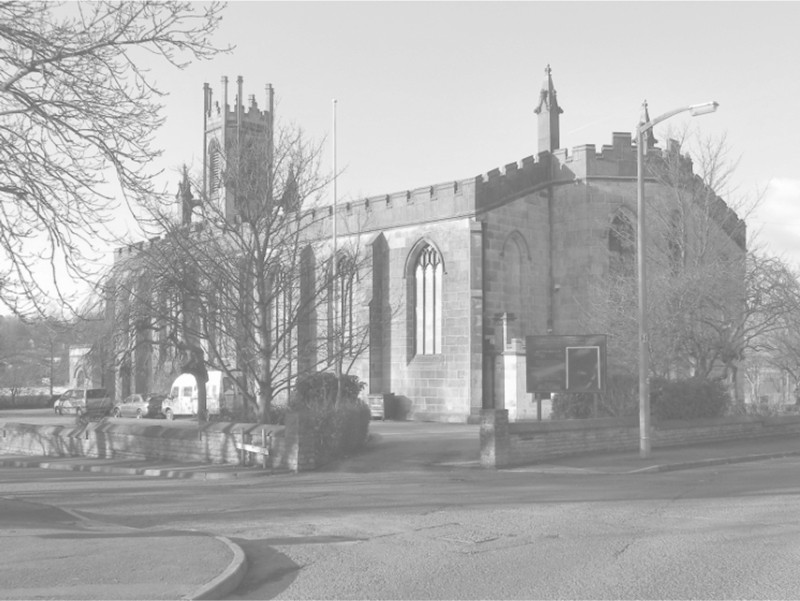
Mayson Hodgeson Sewell and Mary Ann Golightly had married on 20th November 1877 at St Saviours Church, Tynemouth, Northumberland. He is described as an Inland Revenue Officer and is widowed, aged 45. She is 47 and also widowed.
In 1880 the Mary Ann Sewell was granted a divorce from her husband. In the court affidavit she says that Mayson treated her with neglect, unkindness and cruelty. She was thrown out of bed and onto the stairs in her night dress, he kicked her on the legs and nipped on her arms and body severely, all in the presence of Mayson’s two sons and a servant. He also threatened to murder her and struck her with his fist on the forehead, knocked her head against wall, seized her by the breasts and nipped her severely, seized her by her hair, lifted her off her feet and threw her out of doors and locked her out.
She also claims that Mayson committed adultery with Elizabeth Husband from 1877 in multiple locations including in his offices of the Inland Revenue in Newcastle! Racey eh?
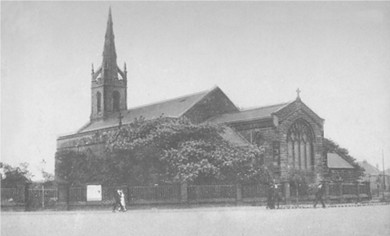
Mayson Hodgeson Sewell was born in 1832 in Burgh by Sea, Cumberland and was the son of John, a surgeon, and his wife Jane. In the 1841 census the family are still in Burgh by Sea and have four boys as well as Mayson, and a female servant. By 1851 Mayson’s father had died and he is living with his mother with a younger brother and two younger sisters. The youngest sister is nine which might mean John, the father, had died early in the decade. Mayson is 18 and described as having no occupation, his mother is an annuitant so living on her own means. There is no sign of Mayson on the 1861 census but by 1871 he is a division officer of excise, aged 38, and living with his family in Carnaby Street, Leeds. His wife is Grace, 32 and they have seven sons. It looks like Grace died in 1875 and he married Mary Ann in 1877, and it is her he divorced in 1880.
So what happened after the divorce? Well, in 1881 he is described as a widower and an excise officer living at 42 Bold Street, Blackburn with his son from his first marriage, Denton, aged 9. He married Georgina Campbell in 1882 (did she know he was divorced?) and they had at least 3 children. He died in 1895 and the inscription on the grave describes him as the third son of Dr Sewell. By the looking at Street View on Google maps number 42 Bold Street is no longer there but the houses around look like they might have been built by 1881 and are fairly small 3-bed terraces. I do wonder if having been divorced he would have been able to continue as an excise officer, and he was in fairly straightened circumstances by 1881.
Sole
One divorce of interest is that of Mary Acland Sole and Frank Hilary Anslow Sole in 1917 which followed a petition by Mary for restitution of conjugal rights in 1916. The couple had married in 1911 in Norfolk and at that point he was described as aged 34, a farmer whose father was William Anslow Sole (deceased), Clerk in Holy Orders. She was 22 and her father was a Civil Engineer. Mary Sole issued an affidavit that the couple lived together at various addresses in Oxfordshire after marriage and that there was a child named Hilary Mollie Anslow Sole born in 1912. She stated in the affidavit that Frank Sole refused to live with her and was living at Crudwell Rectory, Malmsebury (his father’s parish), Wiltshire and had no occupation. She had written to him asking him what his intentions were and the letters are reproduced in the court documents. His reply was that he wouldn’t return and live with her and he said that if he could do anything as a friend he would be pleased to do so. The decree was granted and served on Frank Sole. He failed to comply and was therefore guilty of desertion. Frank was described as being of independent means.
The marriage was dissolved on 12th April 1918 on the grounds of adultery and desertion. The child, Hilary, remained with her mother as far as we can tell. Mary Sole went on to marry Edgar William Duffield who was described as a chartered accountant and they had at least one daughter. Hilary Sole is described as his step daughter on the 1921 census whose father is dead, whilst in fact Frank Sole didn’t die till 1932. But I guess with the stigma around divorce, the couple didn’t want the enumerator (and perhaps the neighbours) knowing their business, or maybe Edgar Duffield didn’t know Mary had been divorced, but rather thought she was widowed, when they married. On the 1921 census Frank is a private school teacher in Hambledon, Surrey and has remarried. His house no longer exists.
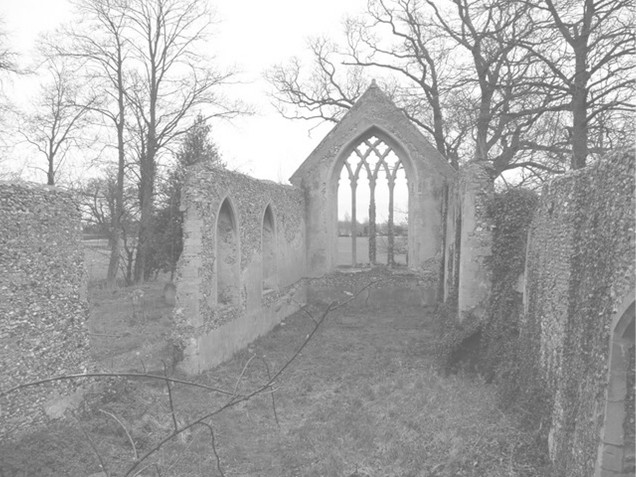
St Mary’s Church Tivetsall in 1917. It is now ruined. This file is licensed under the Creative Commons Attribution-Share Alike 2.0 Generic license. and is attributed to Jonathan Billinger
I wrote to Maureen Storey, the research co-ordinator for the Sole surname, to find out what she knew about Frank Hilary Anslow Sole. She replied: On the face of it our records for them go back to the late 1400s. However, the original source we had for this family was a Victorian pedigree. However, as far as I can see there’s parish register evidence that could take the family back a Sole family who lived in Stretham, Cambridge in the 16th century but as there are some missing baptisms it’s far from certain if the line is correct beyond Francis Sole and Susan Free of Witchford, who were Frank’s 4xgt grandparents.
When it comes to Frank himself, he married again in 1918 to Jean Mackay and died in the Malmesbury Reg Distr in 1932.
She also told me that he had been to Cheltenham College between 1877 and 1895 at which time his father’s residence was listed as Crudwell Rectory, near Malmesbury. He went to Cambridge in 1895. Interestingly we have a description of him from his Army records: his height is listed at 5 feet 7 3/4 inches and his weight is 167Ib. He is described as having some teeth missing. Although he gives his residence is Malmesbury, his next of kin is his wife Mary in Sutton Coldfield even though his address was Malmesbury. This suggests there were problems with the marriage by then. Within ten days of joining in 1915 as a private he was promoted to 2nd Lieutenant (probationary). However he was gazetted out three months later. Regarding this Maureen wrote: There’s a letter (dated 16 Sep 1916) with his records stating that it was felt that ‘the interests of discipline will be better served by gazetting this officer out of the army rather than by trying him by General Court Martial’
Perthaps a black sheep from the issues he had in the army?
Soley
On May 10th 1915 William Harold Soley, 23, a tailor, married Ida Elliot, a shop assistant. William’s father was an herbalist and pharmacologist while Ida’s father was a plumber and decorator. William Soley filed a petition against his wife Ida and Harry Thorpe for adultery in November 1916 and the final divorce was granted in September 1917.
The affidavit William filed stated that he and Ida had lived together at 35 Hill Street, Oldham and that Ida frequently committed adultery with Harry Thorpe. By the time of divorce William was living at 27 Clegg Street, Oldham probably with his father. The divorce was granted and Harry Thorpe had to pay £64–4-10 as expenses to William Harold Soley.
35 Hill Street is no longer there and neither are the other houses on the street, however the houses around 27 Clegg Street are still present and are fairly respectable three-bedroom terraces but are by no means grand.
By the 1921 census William Soley has married again to Alma Smart, he is a tailor working on his own account living at 245 Huddersfield Road, Oldham which is a very small two/three bedroom house. The couple are on the 1939 register in Oldham aged 46 and 48. William is worked on an ambulance in the ARP. The house has been knocked down.
William’s father, William the pharmacologist, was born in 1860 in Alcester, Warwickshire. His wife was Ellen who was born in Congleton, Cheshire.
The original William’s grandfather was Thomas Soley, (born in 1836 in Mickleton Gloucestershire) who was a farm servant in 1841 and later a gardener. He married Maria Yeates in Mickleton, Gloucester in 1859.
This Thomas Soley’s father was John, whose age is given as 40 on 1841 census. He was described as a farmer and lived in Evesham and was married to Mary.
On 1841 census, John is living with his family, but living as a separate household in the same premises is Bonner Soley whose given age 60+-5 and was born in Evesham. No relationship given but it is possible that it is John’s father. It is not possible to trace the family further back.
Saul
A Saul ‘nearly’ divorce of interest is that of Catherine Ann (nee Froggatt) and Thomas William Saul which was filed by Catherine in June 1906 but it was struck out or dismissed in 1911. In this case, it was because neither Catherine nor any person on her behalf appeared at the court.
There is a very ornate marriage certificate filed with the divorce papers, because the couple married in Buenos Aires in 1889 although, sadly, the only information on it are the names of the couple, there are no dates of birth, occupations or fathers’ names.
In the petition it states that at the time of marriage Thomas was resident in Buenos Aires and was a commercial traveller. The couple lived in both Buenos Aires and Great Yarmouth and had four children born between 1890 and 1897. The reason for the divorce was that Thomas frequently committed adultery with a Mrs Sheilds, a Mrs Blatner and a woman ‘unknown’ in 1902 and 1903. In 1904 he deserted Catherine and in the petition it says that she had no knowledge of his whereabouts although she does state that he resides in England. Elsewhere in the petition it says that adverts had been placed in the Vancouver World and the Vancouver News Advertiser to find him.
Neither Catherine nor her children are on the 1911 census when the divorce was struck out in 1911. So it may have been that they had already returned to Buenos Aires by then.
When I asked John Slaughter, the research coordinator for the Saul surname, about Thomas he said that Thomas had turned up in Canada and that he would write an article about him for a future journal.
In 1901 Thomas, 34, and his family were living in St George’s Road, Great Yarmouth which is a largish two storey 3-4 bedroom terraced house, by no means grand, although he is described as an employer, but his occupation is ‘tinker merchant’ an employer, At the time of the petition Catherine is living Wolseley Road in Yarmouth, if anything an even smaller 2-3 bed terrace. In 1901 the family have a domestic servant.
One way of telling how wealthy someone was is to look the occupations and at the census address on Google maps. However the further back you go, the more likely the houses are to have been demolished. But it seems that two of our husbands, William Soley and Thomas Saul the tailor and commercial traveller had fairly ordinary occupations and lived at fairly humble addresses. The other came from slightly ‘grander’ backgrounds with fathers’ a surgeon (Mayson Sewell) and Clerk in holy orders (Frank Sole). But none were what I would have described as very wealthy and so I am very surprised that any of them were divorced in the late 1900s or early 20th century